
Hampden City Directory Collections at Springfield Library
Springfield City Library Local History and Genealogy reports a near-complete Springfield city-directory shelf from 1866 through 1989. That long run is the most useful local starting point for a Hampden city directory search because it lets a researcher compare a name or address across adjacent editions. Central Library also offers local-history reference help, newspaper access, microfilm, yearbooks, and genealogy resources. Directory coverage outside Springfield is more scattered, so the title page, place named in the volume, and edition year matter before treating a listing as countywide.
| Collection or route | Years represented | Where to consult it | Access method |
|---|---|---|---|
| Springfield city-directory shelf | 1866-1989 | Springfield City Library, Central Library | In person, reference help, and some digitized volumes |
| Springfield and nearby-place listings | 1929-1931 | National Archives city-directory listing | Online listing, then confirm the edition and repository |
| Westfield and surrounding-community listings | 1928-1931 | National Archives city-directory listing | Online listing, then verify the volume scope |
| Chicopee historical files | Pre-1848 Springfield-era material and later local history | Chicopee Public Library History Room | Repository inquiry and in-person research |
| Printed directories and voting lists | Varies by catalog item | Massachusetts State Library | Catalog or shelf-check request |
The library’s reference desk can be reached at 413-263-6828 ext. 213, or through Ask a Librarian. Researchers can use the volumes at Central Library, ask about a digitized copy, use interlibrary loan or the State Library catalog when appropriate, and arrange a separate archive visit for manuscript material. A library-card database may have its own remote-access rule, so confirm access before relying on it.
The known collection milestones help set a search window before opening a volume.
- 1866: Springfield City Library’s documented city-directory run begins.
- 1928-1931: National Archives listings identify Westfield directories with surrounding communities.
- 1929-1931: National Archives listings identify Springfield volumes that include nearby places.
- September 1946: A Springfield press strike created a newspaper gap around that directory era.
- 1989: Springfield City Library’s documented directory shelf ends.
Note: Record the volume year, page, municipality, and the spelling printed in every Hampden city directory result.
Hampden City Directories on the Local-History Shelf
The library collection is useful because it is a sequence, not a one-time answer. Start with the earliest plausible edition and check editions on either side. A name that moves, disappears, changes firm, or gains a cross-reference can point to the next source to inspect. Keep the edition, page, address as printed, occupation or business wording, and any cross-reference together. Do not silently modernize an old street name or postal label, since that can detach a record from the historical volume that supplied it.
The library’s local-history page is the source for the collection and reference route shown here.
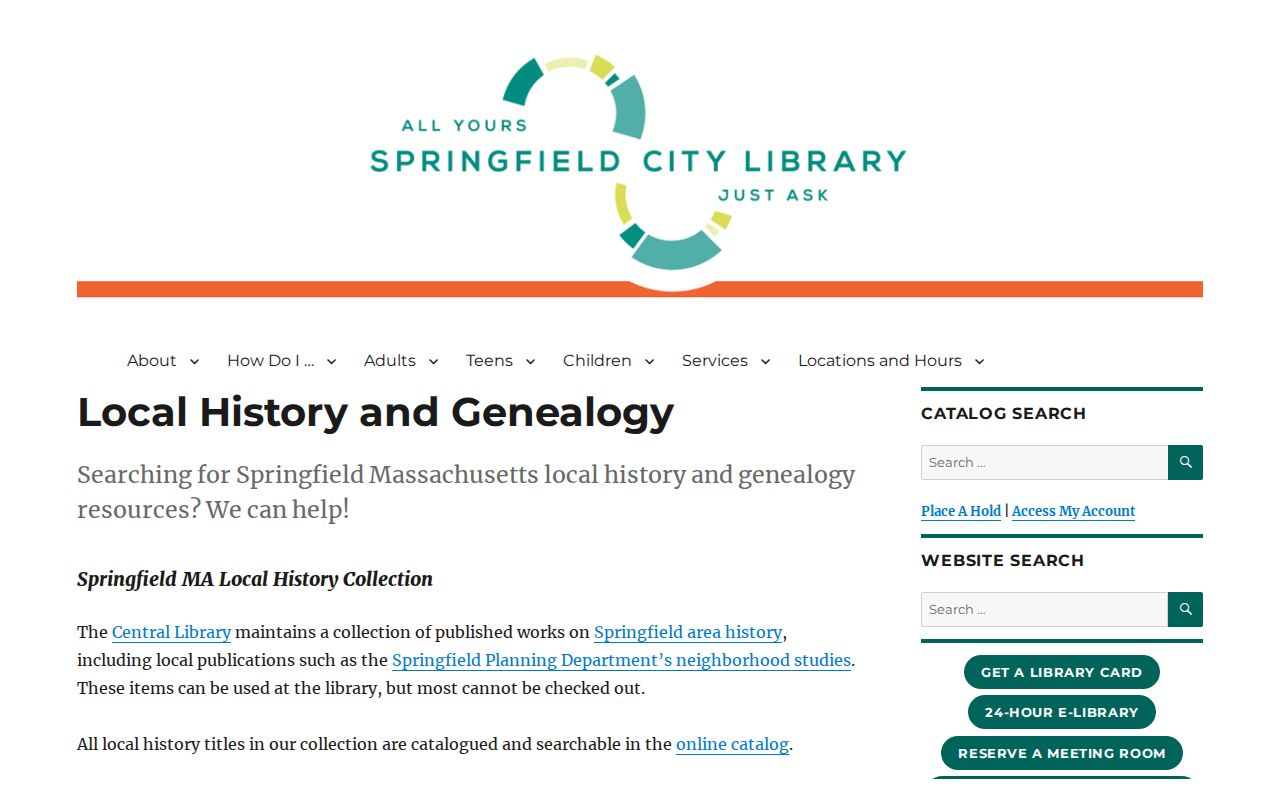
The library source groups the directory shelf with newspapers, yearbooks, and genealogy help, which makes it practical to move from a printed address to a dated supporting record.
Some directory volumes are digitized through Internet Archive, but digitization does not make every edition searchable or complete. If a scan is unclear, the printed or microfilm copy and a librarian’s shelf check remain useful access channels. For pre-1900 newspaper context, Springfield History Library & Archives is the documented local repository rather than a substitute web index.
Hampden City Directory Runs Beyond Springfield
Hampden County has 23 municipalities, and a directory title can cover a city, a cluster of neighboring places, or only one community. Feeding Hills, Indian Orchard, Thorndike, Three Rivers, and Woronoco are postal-place labels rather than separate county municipalities. That distinction matters when a volume uses a familiar postal name while a deed, census, or municipal record uses a different jurisdiction. Keep the directory’s place name and the present municipality as separate notes.
National Archives city-directory listings identify Springfield volumes for 1929 through 1931, including Chicopee, West Springfield, and Longmeadow, and Westfield listings for 1928 through 1931 with surrounding communities. The listing is a discovery aid, not proof that every Hampden town appears in each edition.
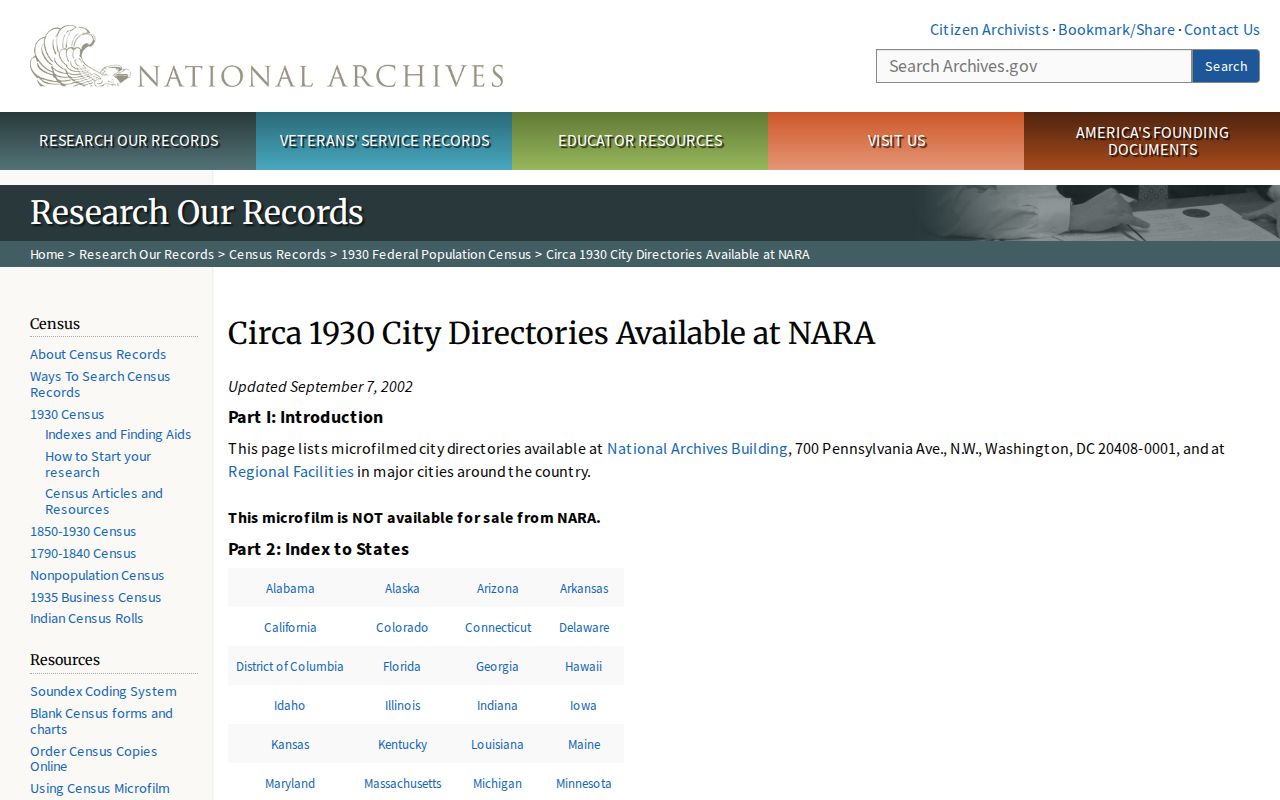
Use the listing to identify a likely volume, then confirm its title page, date, and geographic scope before adding it to a family or address timeline.
The Massachusetts State Library directory and voting-list holdings provide another route for towns where the Springfield shelf is thin. Ask for the exact title, year, municipality, and whether the item is reference-only, on microfilm, or digitized. The Chicopee History Room also preserves material from before Chicopee separated from Springfield in 1848, a useful boundary-crossing lead for early local work.
Reading a Hampden City Directory Entry
A directory entry is an editorial record made for its edition year. It can name a resident, boarder, business owner, firm, public office, telephone listing, or advertiser. It is not a deed, and it cannot establish a current address or a legal relationship. The 1874 Springfield directory is a useful reminder to inspect the actual page and abbreviation practice in the chosen volume, because a text-only research pass did not verify a universal entry schema for every edition.
| Name as printed | Keep initials, spelling variants, and cross-references exactly as the edition gives them. |
|---|---|
| Occupation or firm | Record the business or occupation wording when present, without assuming it proves a later role. |
| House number and street | Preserve the source spelling, direction, unit detail, and any old street form. |
| Household clue | Note a spouse or other household reference only when the volume actually provides one. |
| Edition evidence | Save the publisher or volume year, page, and any “see,” “removed,” or cross-reference notation. |
- Criss-cross directory
- A reverse-address arrangement that groups listings by street and number when the particular volume includes one.
- Householder index
- An alphabetical name route that can help locate the household listing before comparing an address entry.
- Abbreviation key
- The volume’s own key to shortened words and marks. Check it before interpreting a notation from a scan.
Cross-check a historic property address with a census image, recorded deed or plan, newspaper notice, or vital-record route. Each source answers a different question. A directory’s address is a dated clue, while a recorded instrument identifies a recorded transaction and a census gives household context.
Hampden City Directories with Census Evidence
Federal census schedules are public from 1790 through 1950 under the 72-year rule, although most 1890 population schedules were destroyed. From 1850 through 1950, a census image can carry names, ages, birthplaces, relationships or household positions, and other period-specific fields. It is a historical household snapshot, not a current-resident record. Directory years near 1900, 1910, 1920, 1930, 1940, and 1950 can help narrow a town, address, or enumeration district before opening the census image.
The National Archives directory resource and its census materials are access guides, while images may live with partner repositories. Preserve both the archival citation and the image source. Compare names, street, age, household members, and occupation rather than accepting a name match alone.
Note: A directory, census, and vital-index match needs dates and identifiers that fit the same person and place.
The 1946 Springfield Press Strike
Newspapers often help explain a move, a probate notice, a business change, or an address appearing between directory editions. Springfield City Library’s Republican Historical & Current archive reaches from 1844 to the present through NewsBank for eligible cardholders, and Central Library has detailed microfilm runs. Pre-1900 material is held at Springfield History Library & Archives. Search predecessor and successor titles around a date rather than assuming one newspaper title ran without interruption.
A major press strike shut down Springfield presses in September 1946. An empty newspaper search in that period is not proof that a person, event, or notice was absent. Try Central Library microfilm, later anniversary coverage, an obituary route, a vital-record request where allowed, or a repository inquiry. Record the title, date, page, column, and whether the item is a contemporaneous report.
Chicopee History Room Before the 1848 Boundary
Chicopee Public Library’s History Room holds vertical files on people and events, historical-home files, manuscripts, photographs, family and business records, and pre-1848 material from the period when Chicopee was part of Springfield. It is also a FamilySearch Affiliate Library. That makes it a distinct companion to the Springfield shelf when a directory trail crosses the older municipal boundary.
Ask a targeted question with a person, house, business, municipality, approximate date, and known street. The documented contact is archivist Kate Ouimette at 413-594-1800 ext. 109 or kouimette@cwmars.org. Photocopying is at librarian discretion, and patrons may take photographs. A catalog or vertical-file description identifies a collection, not every person who appears inside it.
Springfield History Library & Archives adds French-Canadian records, Ellis Island indexes, the Loiselle Index, genealogy books, microforms, photographs, deeds, land records, diaries, and personal papers. It is available by appointment Tuesday through Friday, with drop-in hours on Wednesday and the first Saturday. These are repository leads for careful historical work, not a countywide public name database.
Trace Hampden City Directory Families Across Years
A good family-history trail uses several dated records and labels what each one proves. The first directory entry can supply a name spelling and street. Nearby editions can reveal a move or a business change. The census then adds household context, while a deed, probate file, newspaper notice, or vital record may explain an endpoint. The collection details remain on this historical shelf; current address-keyed records belong with the Hampden by-street directory.
- Choose the earliest plausible directory edition and transcribe the name, address, occupation or firm, page, and any cross-reference.
- Check earlier and later editions, keeping each spelling, street form, and move in date order.
- Use a reverse or criss-cross section when that edition supplies one, then compare nearby listings without assuming they prove a relationship.
- Pair a directory decade with a nearby public census image and compare town, address, age, household members, and occupation.
- Use newspaper, deed, probate, or vital-record routes for a dated endpoint, citing the custodian and access method.
A disappearance can mean a move, death, changed spelling, unlisted status, or a gap in the surviving edition. It is not an answer by itself. Preserve the negative search with the volume, page range, name variant, date checked, and scope, then identify the next repository or custodian to ask.
Hampden City Directory Notes and Research Limits
Hampden research works best when every claim stays tied to its source and date. The same address can appear as a directory listing, a census location, a parcel situs, a mailing address, a legal description, or a postal place. Those labels are not interchangeable. A directory entry may identify a resident, boarder, firm, or advertisement at publication time, while a deed may identify only parties to a recorded instrument. Keep the role and date beside each finding.
When a scan is not found, retain the exact query, name variants, date range, repository, and whether the collection was searchable online, viewed at a counter, or requested from staff. The absence of a portal result is not proof that a record never existed. It may reflect an unscanned volume, OCR error, a changed street, a different municipality, or a collection that needs an appointment.
Note: Handle historical names and addresses with care, and never use directory research to stalk, harass, or harm anyone.